The Profession of an Artist Helped Me Bring My Dream of Creating My Own Universe to Life

Your education is connected with fashion design. What did you lack in that role, and what did you find as an artist?

By the time I approached my final year at St. Petersburg State Art and Industry Academy named after A.L. Stieglitz, I realized I wouldn’t become a fashion designer. I preferred drawing dresses to sewing them. For me, as an artist, it’s important to be fully responsible for the finished work. If something doesn’t work out, there’s no one to blame but myself. A designer, on the other hand, has to share responsibility with the team.

My studies gave me a solid artistic foundation. Painting and drawing were prioritized. Stieglitz Academy provided a serious art education first and foremost, and only then a practical one. After winning a student competition, I interned with fashion designer Tatyana Kotegova. My task was to create quick sketches based on her ideas. But I realized that working in fashion meant being a bit of a “tyrant” and a team player at the same time, whereas I was drawn to independent creation.

In the end, instead of sewing a collection, I painted it. Designers supported me—they saw an artist rather than a fashion designer. Already during my final year, I began participating in group shows and held my first solo exhibition. That’s when I chose my path—to be an artist accountable only to myself.

Your fashion experience clearly influenced your art: for quite a while, your paintings featured glamorous, hyperrealist scenes. When did you shift toward the surreal, cosmic imagery?

I think my heroines in red evening gowns simply moved from cityscapes into the cosmic spaces of Cosmodreams. That glamorous undertone still hasn’t left me. I love these images, though I don’t always treat them seriously—there’s always some irony in them. If I paint a woman in a red dress, she might be standing on the Moon’s surface with a suitcase—her spacecraft forgot to pick her up. Or maybe she’s holding a Strugatsky book.

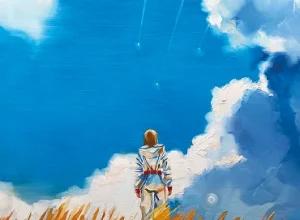
As a child, I witnessed the fascination with Soviet space achievements. I grew up on science fiction—my shelf was filled with Kir Bulychev, Ray Bradbury, Isaac Asimov. The profession of an artist helped me bring my dream of creating my own universe to life. Space became a limitless world where I can create endlessly. I believe I will continue working on Cosmodreams for many years.

The project combines painting, sculpture, AR- and VR-technologies. How do these directions interact?

Cosmodreams is a project I carried within me for a long time. It emerged from my interest in painting, sculpture, and new technologies like AR and VR. It’s an attempt to create an entire universe where traditional art is reimagined and brought to life through digital media. I start with a painting and build a narrative around it. Then, with designers and animators, we animate the drawings and create a “script” for their life. VR and AR usually complement the entire exhibition, not individual canvases. For example, in 2020 for the first Cosmodreams show, we launched “Museum on the Moon”—a 3D tour during the pandemic so people could “visit” the museum virtually.

I’ve been interested in new technologies since student days, when digital programs were just emerging. When the opportunity came, I started experimenting with other media. I’m still curious about the new, but painting remains my main and favorite technique, while digital is a pleasant addition. Another reason was my desire to create relevant art for new generations. It saddens me how gadgets consume children’s attention, so I decided to draw them to art through phone screens. Bored by static paintings? Watch them come alive with VR and AR. I started with simple scenarios but got hooked. For the 2020 Cosmodreams launch at Erarta Museum in St. Petersburg, we made a mobile app to animate all paintings and sculptures, creating digital copies in a parallel reality. Now my dream is a full virtual museum for all Cosmodreams works—their number nears a thousand!

You’ve shown Cosmodreams at solo shows and fairs not only in Russia but in China, UAE, and Saudi Arabia. What resonates most with audiences there?

All these countries have strict censorship. I don’t show provocative works—I respect cultural norms. The UAE loves my glamorous side: beautiful dresses and glossy images catch attention. Chinese viewers are curious like children, open and disarming. Many want to talk to the artist and hear the story behind a work. Nature preservation and contemplating beauty matter to them too, so I emphasize conceptual depth over visuals. Nuances differ everywhere, but Cosmodreams appeals universally, especially its technical side—the idea of paintings with storylines captivates all.

At this year’s ART021 fair in Shanghai, you designed a booth as a red room with a checkered floor—very reminiscent of the Black Lodge from Twin Peaks. Coincidence or intentional?

Intentional, of course. It was my first childhood series. David Lynch and his mysticism hugely influenced me early on. I wanted to create things that feel otherworldly, like David Hopper’s paintings—realistic everyday life but with a chill down the spine. That’s the state I always aim to convey.

The Dinner in Red project was a shake-up from my usual cosmos, flowers, nature style. I fear getting stuck, so sometimes I show the artist can joke—ironic, grotesque projects. But Chinese audiences missed the Twin Peaks reference and took it literally. I had to explain the woman eating a man’s brains as a nod to the Russian idiom “to eat brains with a teaspoon,” or that the cracked face is Humpty Dumpty from children’s lit.

How has the project developed in Russia? Do you focus more on the domestic art market or international audiences?

Cosmodreams was born in Russia and grew abroad. Working there lets me share my art and culture with global viewers. I often draw from Russian fairy tales, Soviet heritage, cultural codes—like my “Русские сказки” and “Патриотизм” clusters. I love this return to cultural roots and have many ideas to expand it.

Research fascinates me. As an artist, I find endless inspiration plunging into mythologies, fairy tales, traditions of different countries. Cosmodreams fills with vivid images: Chinese blue orchids, UAE night legends, Russian space legacy—reimagined in my unique vision. I see myself as a creator of engaging stories making culture accessible, uniting people through familiar traditions and new discoveries. Now it’s vital to revive past archetypes of resilience, beauty, victories for the new generation—to inspire, remind, provide grounding. Art for me is seeking deep meanings, crafting images, preserving traditions; it’s beauty uniting people, giving emotional strength, inner stability in a changing world.

What impression do you want to leave with viewers after interacting with Cosmodreams?

Like a trip to another world, another planet. Each show is a Cosmodreams cluster, a separate world. Leaving, people feel like they’ve returned from another dimension. I want to gift fantasy. Cosmodreams is pure fantasy, my creator’s realm. I invite viewers to journey to other worlds with me.

Source: www.theartnewspaper.ru

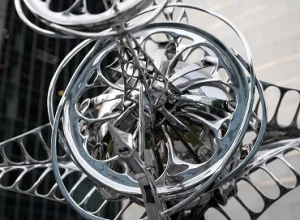
Marina Fedorova’s chrome-plated sculpture Starship will be unveiled at the official opening of the 4th edition of DIFC Sculpture Park on 26 November 2025 and remain on view through 31 May 2026. The work is part of the artist’s ongoing Cosmodreams project.​

Starship began as an oil painting and was transformed by Fedorova into a chrome-plated sculpture inspired by Islamic geometric star patterns and traditional navigation. Its aerodynamic, spacecraft-like design and accompanying video invite viewers to explore cosmic journeys and human identity — central themes of the Cosmodreams project.

Starship stands out among the 50 sculptures at DIFC thanks to a digital layer — a video that reveals Fedorova’s cosmic vision and lets visitors engage with the artist’s perspective via a QR-code. This approach reflects Cosmodreams’ commitment to creating immersive contemporary art and demonstrates how the project presents the artist’s vision across both physical and digital dimensions.

The 2025 DIFC Sculpture Park features 50 works by 27 international artists under the theme “Enduring Forms,” transforming the financial district into an open-air exhibition.

Through bold colours, cosmic atmospheres, and layered symbolism, Fedorova’s work positions Saudi heritage within an expansive, otherworldly vision.

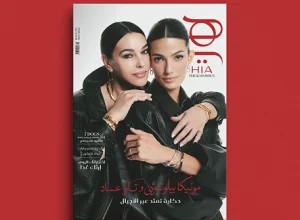
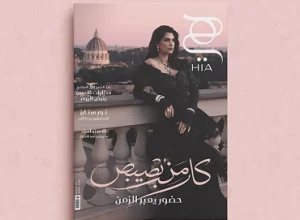
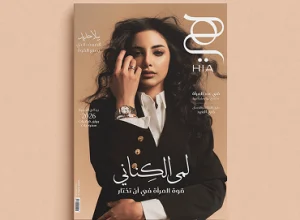
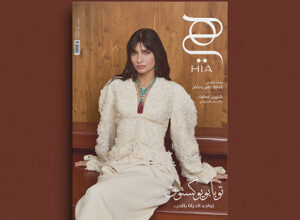
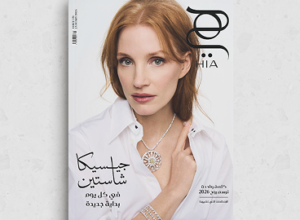
Below is the English translation. Source: Hia Magazine, November, 2025 (312) Click to open

In our time, “well-being” has become a fashionable word, it appears on perfume bottles, spa brochures, and wellness retreats. Yet for me, as an artist, well-being is not something that can be packaged or scheduled. It is not only about green juices, yoga sessions, or flawless skin. True well-being is a state of inner balance , when your outer world reflects your inner harmony.

Art has taught me that balance begins with joy. The moments when I feel most alive are rarely luxurious or staged. They are quiet: a walk through a city after rain, the sound of leaves moving in the wind, the light falling across my studio table. Painting, creating, reading, or simply sitting in silence ,these are my ways to restore balance, to feel myself again.

Happiness, I believe, is the most sustainable beauty ritual. When you fill your days with what makes you genuinely happy ,whether it is painting, cooking, caring for your plants, or spending time with the people you love ,your entire being changes. You radiate calmness, inspiration, and natural elegance. No cosmetic treatment can replace that light that comes from within.

In art, as in life, harmony comes from contrast ,from knowing when to rest and when to create, when to give and when to receive. Well-being, for me, is the art of keeping this rhythm. To live beautifully is to live consciously ,to choose presence over rush, authenticity over perfection, creation over consumption.

Perhaps the greatest luxury today is not time or beauty, but inner peace. And like every artwork, it begins with intention ,the decision to live in tune with yourself.

MARINA FEDOROVA

At the 13th edition of ART021 Shanghai 2025, contemporary artist Marina Fedorova presented Cosmodreams with “Dinner in Red”, an immersive concept that turns the banquet table into a stage for reflecting on contemporary society. The concept confronts themes of excess, performance, and the fragile relationship between nature and modern culture, inviting audiences to consider how spectacle and consumption shape collective experience today.

The exhibition space wass designed like a theatrical stage set, where visitors enter through a round portal – a threshold into another dimension. Inside, deep red walls enveloped the space, complemented by a checkered floor and windows resembling dark theatre lenses. Red, as Fedorova explains, embodies the color of love, life, and appetite, but simultaneously represents danger and desire – a duality that permeates the entire exhibition.

All artworks in “Dinner in Red” were lenticular prints created by layering two paintings into one, causing the image to literally shift as viewers move around them. This transformation mirrored the exhibition’s central theme: nothing is stable, everything is constantly changing. What appears beautiful at first can suddenly reveal something darker underneath. An exploration of the illusion of control and luxury, and how quickly that slips into the grotesque. The shifting surfaces become metaphors for our relationship with desire and consumption, demonstrating how easily beauty and destruction coexist.​

Each lenticular artwork featured its own AR story, bringing the paintings to life through moments of transformation. Notable works include “Trash Madonna,” where drones circle a saint-like figure above an ocean of plastic; “Octopus Girl,” featuring a young woman confronting a giant creature with surveillance cameras on its tentacles; “Ten Suns,” where day turns to night as suns move across the sky and a spaceship approaches; and “Cake,” where sweetness transforms into decay. These digital layers allowed visitors to explore hidden narratives within each artwork, encouraging active participation.

“I want my art not only to reflect contemporaneity, but also to prompt genuine reflection —the search for meaning, authenticity, and honesty with oneself,” Fedorova explains. Through her innovative use of lenticular technology and augmented reality, the artist transfers her ironic vision of modern society, creating what she describes as “a poetic provocation” rather than a moral lesson. “Dinner in Red is not only about beauty but also about awareness — about how what we consume, both visually and emotionally, transforms us,” she states. The installation functioned as a cognitive laboratory where art, technology, and emotion mix, offering “a final toast to a world devoured by its appetites”.

The ART021 Beijing Contemporary Art Fair concluded on May 25, 2025, having welcomed thousands of visitors over four days. One of the notable features of the event was the immersive solo exhibition Chrysalis by acclaimed Russian artist Marina Fedorova, presented by Sputnik Partners at Booth G01. The exhibition captivated audiences with its poetic exploration of transformation, nature, and technology through a distinctly feminine lens.

Drawing crowds from around the globe, including artists, collectors, curators, and media, Chrysalis created a dynamic and engaging environment that invited viewers not only to observe, but to participate. Marina Fedorova’s integration of multiple media — including painting, sculpture, lenticular printing, and augmented reality — created a layered, interactive experience. Viewers were encouraged to use their smartphones to activate AR content embedded in the artworks, extending the narrative beyond the physical installation and deepening the emotional connection.

The exhibition transformed the booth into a contemplative, light-filled space, where stories of metamorphosis and inner growth unfolded. “I explore the moment of transition — the pause between past and future, when everything holds still before a new ascent,” Fedorova said, emphasizing her vision of technology as a means to reestablish harmony with nature rather than disrupt it.

One of the highlights of the fair was the roundtable discussion “Women Artists: Nature, Technology, and Cultural Synthesis,” held on the opening day. Moderated by Xiao Ge, Editor-in-Chief of Phoenix Art, the forum featured Marina Fedorova alongside Peng Wei, a leading Chinese ink artist. The dialogue offered a compelling comparison of artistic approaches across cultures and generations, examining how female voices are shaping contemporary perspectives on nature and innovation.

Visitors to Chrysalis were deeply moved, describing the installation as “a soft digital world” and remarking that the works seemed to “breathe with the body.” This positive reception reflects growing interest in immersive, sensory-driven art that bridges the physical and digital.

Chrysalis marked a significant contribution to ART021 Beijing’s programming and underscored the global relevance of Russian contemporary art. As part of the ongoing Cosmodreams project, it reinforced Fedorova’s commitment to addressing ecological, social, and philosophical themes through cutting-edge media and a nuanced, personal voice.

The Cosmodreams showcase, curated by Sputnik Partners, was included in the official art fair catalogue

A thought-provoking roundtable titled “Women Artists: Nature, Technology, and Cultural Synthesis” took center stage at the opening of ART021 Beijing Contemporary Art Fair on May 22. The forum brought together prominent voices in contemporary art for a cross-cultural dialogue on how female artists are shaping the discourse around ecology, innovation, and identity in an increasingly interconnected world.
Held at the 798·751 Art District, the event featured Russian contemporary artist Marina Fedorova, renowned Chinese ink painter Peng Wei, and was moderated by Xiao Ge, Editor-in-Chief of Phoenix Art and Vice President of the Phoenix Center. The conversation explored how feminine perspectives are redefining the relationship between humans, nature, and digital technology.

Xiao Ge opened the discussion by highlighting how women artists often employ a decentralized, emotionally driven narrative style that emphasizes intuition and lived experience. She noted that such approaches challenge dominant structures and offer new pathways for understanding the human condition in the context of technological change.

Marina Fedorova, known for her immersive multimedia works, emphasized the role of new media as a sensory bridge rather than a barrier between humanity and the natural world. “Technology, when approached with sensitivity, can serve as a tool for reconnection,” she said, referring to her current exhibition Chrysalis, which integrates painting, AR, and sculpture to reflect on transformation and inner renewal.

Peng Wei contributed a contrasting but complementary perspective grounded in traditional Chinese aesthetics. Through the lens of classical ink painting, she reflected on time, balance, and the symbiotic relationship between humans and nature, drawing parallels with Eastern philosophies of cyclical transformation.

Despite their differing artistic languages — one rooted in futurism and digital innovation, the other in classical techniques and cultural memory — both artists expressed a shared commitment to portraying nature as a source of strength, continuity, and emotional depth. Their dialogue underscored the expanding role of women artists in bridging ancient wisdom with contemporary challenges.

The forum concluded with a walk-through of Marina Fedorova’s Chrysalis exhibition at the Sputnik Partners booth, where the conversation continued informally among guests and fellow artists. The session served not only as an exchange of ideas but as a live example of how art can act as a platform for global dialogue and cultural synthesis.

Cosmodreams is a pure fantasy, a futuristic vision that is difficult to define in one sentence. It is a multi-dimensional project combining traditional and digital art. The project incorporates classical art forms like painting and sculpture, blending them with modern digital technologies such as augmented reality, virtual reality, and video art.

The exhibition, curated by Sputnik Partners, highlights the importance of tradition and its evolution in modern life. Inspired by a pre-Islamic goddess of fertility, love, and nature, the exhibition reimagines this figure with a contemporary perspective, reflecting respect for cultural heritage while envisioning its place in the modern world.

Each presentation of the project adapts slightly to the traditions and mythology of the hosting region. For this exhibition, local fairy tales and mythology were incorporated into the artworks, creating a meaningful connection with the region’s heritage. The exhibition’s creative process was shaped over many years, influenced by humanity’s fascination with the cosmos and the possibilities of space exploration.

The project also focuses on the elements of nature, emphasizing ecological concerns. The artist highlights the urgency of preserving and protecting nature, aiming to inspire audiences to coexist with, rather than consume, natural resources. Through art, the exhibition draws attention to environmental challenges and promotes a sense of responsibility toward the planet.

The exhibition features a variety of artistic elements, including sculptures, paintings, and unique techniques like heliogravoure, a 19th- and early 20th-century printing process using copper plates. These plates not only create intricate prints but also serve as design objects themselves. Advanced technologies, such as lenticular printing, are used to create depth and dynamic visuals, enhancing the viewer’s experience.

The blending of these diverse elements defines the project’s name, Elementa. Visitors often describe their experience as stepping into a beautiful dream or exploring another planet. Originally conceived as a traveling exhibition, Cosmodreams aims to reach various countries and cities, with future showcases planned in China and beyond. The exhibition evolves with new sub-themes, ensuring that it remains engaging and fresh.

Cosmodreams encourages everyone to pursue their passions and follow their dreams, inspiring audiences to embrace creativity and imagination in their lives.

MARINA FEDOROVA

The exhibition “Journey with Cosmodreams” will be held at the Powerlong Art Museum in Shanghai from November 16, 2024, to February 16, 2025. Cosmodreams is an artistic project that celebrates space exploration and romantic memories of the USSR’s achievements. Fedorova reinterprets the philosophy of futurism, contemplating where it might lead us in the 21st century.

In her work, the artist combines traditional painting with cutting-edge digital technologies, including augmented reality (AR), video art, and interactive zones. The exhibition is thoughtfully structured to allow viewers to feel the contrast between cosmic space and earthly nature through visual, color, and sound elements.

The exhibition by a Russian artist in one of Shanghai’s prestigious art venues marks an important stage in cultural exchange between Russia and China, showcasing the power of art to bring these two great cultures closer together and creating a new perspective on the global stage. The artist sees potential in the spiritual connections between the two nations, which can help the audience to understand and experience the artist’s fresh works influenced by Russian heritage.

Marina Fedorova, artist: “The exhibition in China is not just a display of works; it’s an opportunity to build bridges between our cultures. China has always been a source of inspiration for me—a country with profound philosophy, traditions, and culture. I hope this exhibition will foster dialogue between our cultures because art knows no boundaries.”

The Cosmodreams project is made possible through the active support of Sputnik Partners, a company dedicated to preserving and promoting cultural and historical heritage.

The exhibition will take place from November 16, 2024, to February 16, 2025, at the Powerlong Art Museum (Shanghai Powerlong Museum), Hall 7, located at 3055 Caobao Road, Minhang District, Shanghai. Entrance in charged.

Marina Fedorova, one of two mentors in this year’s Art + Tech Programme, has guided a group of talented UAE students in creating an innovative installation. The result of their collaboration will be unveiled at Abu Dhabi Art 2024, showcasing the exciting intersection of art and technology.

Art + Tech is an annual community programme commissioned by the Department of Culture and Tourism – Abu Dhabi inviting artists to collaborate with Art and Technology students in a series of workshops. The purpose of the program is to bridge the gap between Art + Technology in their studies.

The international artist Marina Fedorova, well known for her past exhibitions at Art Dubai, Dubai Design Week and Ethereal Echoes, is one of the two lead mentors for the Art & Tech Programme showcase at Abu Dhabi Art 2024.

Under the guidance of experienced artist Marina Fedorova, university students embarked on a transformational journey, exploring the possibilities of augmented reality, which opens up unique ways to bring artistic concepts to life that are inaccessible to traditional forms of art. Working with Marina provides students with a rare opportunity to gain practical skills and knowledge in the use of augmented reality in their creative work.

“Art and technology are not opposites, they are partners,” Fedorova asserts. “When used properly, technology can help bring visitors closer to the values and history we are trying to convey.”

This amalgam of technology and art will be unveiled at Abu Dhabi Art 2024 from 20-24 November, where Fedorova’s cutting-edge digital art will set a new standard for how we engage with visual storytelling.

Art + Tech programme
Abu Dhabi Art
November 20-24, 2024
Manarat Al Saadiyat, Abu Dhabi
Community Projects section

On November 15, Shanghai Powerlong Museum held an opening ceremony of Marina Fedorova’s solo exhibition “Journey with Cosmodreams: Exploring the Infinite”. This exhibition is part of the ongoing Cosmodreams art project and invites audiences to experience an artistic realm that focuses on the future, the natural world, and the human spirit of exploration. The artist was joined by Wendy Xu, Chief Curator of the Powerlong Museum, Grace Zhang, Deputy Director of the Powerlong Museum, and invited guests from art, cultural, and media circles to celebrate this exploration of the future and the universe.

The exhibition’s immersive spatial design transports visitors into a simulated world where the lines between imagination and reality blur. The five exhibition areas focus on outer space, futuristic cities, and humanity’s emotional connection to nature, encouraging a discussion about our role in a rapidly evolving universe. Fedorova’s work encourages visitors to reconsider the connections between humanity, technology, and nature.

“Journey with Cosmodreams” features interactive elements, including augmented reality (AR), enabling visitors to discover hidden surprises within the artworks. By scanning QR codes located near specific pieces, audiences can access additional content through the official WeChat mini program. This enhances their engagement and creates a dynamic, personalized art experience.

In “Journey with Cosmodreams”, Marina Fedorova redefines art’s ability to inspire, ensuring that this creative exploration never truly ends.

The Cosmodreams project is actively supported by Sputnik Partners, whose dedication to cultural and historical heritage preservation is profound.

The exhibition takes place until February 16, 2025, at Shanghai Powerlong Museum, Hall 7, located at 3055 Caobao Road, Minhang District, Shanghai. Entrance charged.