Tag: Interview

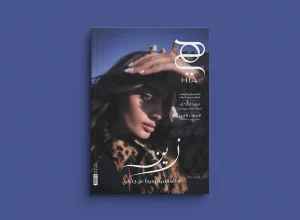
  • The Art of Summer: Marina Fedorova’s column for Hia Magazine

    The Art of Summer: Marina Fedorova’s column for Hia Magazine

    Summer changes the way we see the world. Colors become brighter, days longer, memories more cinematic. For artists, summer has never been simply a season. It is a state of light, movement, and imagination.

    For centuries, artists and writers have been fascinated by travel not simply as movement through geography, but as a transformation of perception. A train station, a hotel terrace, a garden at sunset. Summer has always carried a particular emotional intensity: freedom mixed with nostalgia, beauty mixed with the awareness that everything is temporary. Perhaps this is why so many masterpieces in art were born from journeys.

    The story begins with the Impressionists. In the nineteenth century, artists left their studios and traveled toward sunlight. Normandy, the Mediterranean, Venice, London fog, seaside resorts, these places became laboratories of modern vision. Claude Monet painted not objects, but atmosphere itself: reflections trembling on water, summer gardens dissolving into color, cathedrals disappearing in changing light. Travel allowed him to observe how the world transforms from one hour to another.

    More than a century later, David Hockney continues this dialogue with light and landscape in a completely contemporary way. Like Monet, Hockney became deeply inspired by Normandy, creating vibrant digital paintings on his iPad during his stay there. Blossoming trees, changing skies, morning roads after rain. Technology changes, but artistic wonder remains the same. Hockney’s California swimming pools are also among the great modern icons of summer — images flooded with sunlight, leisure, turquoise water, and architectural clarity.

    Many writers were inspired by summer as well. Marcel Proust transformed seaside summers and gardens into meditations on memory and time. Ernest Hemingway turned movement itself into literature: trains, cafés, coastlines, fishing boats, roads disappearing into heat.

    Perhaps this is the true luxury of summer: not speed, but attention. The ability to notice light on a hotel curtain, reflections in train windows, the color of evening air after the heat of the day. So this season, alongside sunglasses and swimwear, perhaps don’t forget to pack a nice book with you.

    Below is the English translation. Source: Hia Magazine, June, 2026 (236) Click to open

    MARINA FEDOROVA
  • The Power of Color in Art: Black and Red in Marina Fedorova’s Works

    The Power of Color in Art: Black and Red in Marina Fedorova’s Works

    Do you have a story or a moment when red or black first became not just a background, but the main character in your work?

    I think it happened at the very beginning of my career. My first training was in graphic art. My graduation project at the Roerich Art School was a project developed for Tatyana Parfyonova’s fashion house, Sphere, and it used only three colors: red, black, and white. This is my favorite palette.

    At first, it was dictated by technique: white was the paper, black was ink, and red was acrylic paint — or even simply red paper. When working in oil, I often paint monochrome works using only white and black. Red is an accent, an intensification of effect, a point of emphasis.

    But in the series Dinner in Red, red became the main character. It dictated the dramaturgy of the entire work; like theatrical lighting, it attracted, disturbed, and hypnotized all at once. And in the project Black, black ceased to be a color and became a state. It was no longer a background or a decorative element, but a space of silence, expectations, and inner tension. In this series, black is not outer space, but a starless night, the black waters of the sea, a black stone hanging over the chest, it is that moment when form still exists and yet is already dissolving.

    How do you choose colors for a work? When you begin a new work, does color come first, or does it follow the idea?

    Usually, the idea and the color arise almost simultaneously, as a sensation. But this works differently in different series. For example, in Dinner in Red, color was the starting point. I wanted to create a space in which the viewer would literally find themselves inside red, inside an anxious celebration, a surreal performance. Red became the architecture of the project: the walls, the light, the objects, and the works themselves. In Black, by contrast, everything began with an inner state — a feeling of fragility, silence, tension before rupture. Only afterward did black appear as the only possible environment for that state. It seemed to absorb everything superfluous, leaving only form, light, and inner vibration.

    Red and black carry a powerful cultural burden — passion, death, power. Do you use the cultural codes of color as a tool or as material for reinterpretation?

    More as material for reinterpretation. I am interested in the fact that color is never neutral; we all read it through culture, history, and personal memory. Red can simultaneously be the color of love, revolution, blood, celebration, or anxiety. It always contains beauty and, at the same time, a sense of danger. Black is the color of elegance and mourning. The combination of black and red is my favorite, like Stendhal’s novel The Red and the Black.

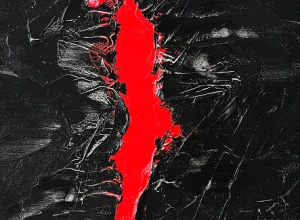
    In Dinner in Red, red is associated with an excess of life, with theater, ritual, and an almost baroque emotionality, like red velvet curtains or the canopy of a royal bed. In Rupture, black is the earth’s embers, and red is lava, the open wound of the landscape. There, red is no longer decorative or theatrical. It is almost physical, like a flash of pain or memory.

    After red and black, is there a color that currently attracts or troubles you? Where is your dialogue with color moving next?

    Every color has its own beauty. Many of my works are dominated by white. My series Blue Orchids, created for ART021, was painted entirely in cobalt. And in summer, I spend a lot of time in nature, which is where green finds me. I feel genuinely inspired by it, and it shows up in my palette more and more during those months.

  • Marina Fedorova’s column for Hia: Love beyond gravity and within

    Marina Fedorova’s column for Hia: Love beyond gravity and within

    May has always been the season of promises. White, light fabrics, open skies, and the quiet anticipation of transformation. The moment when love seeks form through ceremonies, gestures, and, inevitably, through dress.

    Somehow it makes me think about dreamlike art language of Marc Chagall. Love, wonder and marriage inspired him through all his life. For Chagall marriage is not a structure, not even a ritual, but a shift in reality.

    In his paintings, lovers do not stand side by side. They float. They bend. They dissolve into color and sky. In works like The Birthday or Over the Town, gravity loses its authority, and with it, the rules that define the physical world. In Chagall’s universe, the bride becomes something else entirely. She ascends. Her body is no longer confined by the architecture of the room or the logic of perspective. She exists in a suspended state, between earth and sky, memory and dream.

    Contemporary bridal fashion seems to intuitively return to this idea. Layers of translucent tulle, weightless silks, floating veils that blur the boundary between body and atmosphere, designers today are not simply dressing the bride, they are dematerializing her. The silhouette becomes fluid, almost unstable, as if the body itself is in the process of becoming something else.

    If we follow Chagall’s vision, the bride is not simply a woman in white: she is a figure in transition. A body entering another dimension. A presence suspended between reality and dream. A veil becomes a cloud. And love? Love is the force that lifts her.

    Contemporary artists continue to explore the topic of the bridal transformation, expand and reimagine the bridal form.

    In the work of Kiki Smith, the bride is no longer an image of perfection, but a state of transformation. Her quiet, life-sized figures rendered in wax, bronze, or delicate textiles stand in stillness, often veiled or dressed in white. Yet this whiteness does not signify purity in the traditional sense. It becomes a thin boundary, a membrane between inner and outer worlds.

    In contrast to the dreamlike levitation of Marc Chagall, where love lifts the figure into the sky, Smith turns inward. Her bride does not float. She becomes. A presence at the threshold is quiet, vulnerable, and profoundly real.

    Below is the English translation. Source: Hia Magazine, May, 2026 (248) Click to open

    MARINA FEDOROVA

  • Marina Fedorova for Hia Magazine nostalgia at its core

    Marina Fedorova for Hia Magazine nostalgia at its core

    In her column Nostalgia at Its Core, Marina Fedorova reflects on how longing shapes her art: not as a retreat into the past, but as a quiet bridge between memory and the present one that gives beauty its deepest meaning.

    Nostalgia reveals itself not as a retreat into the past, but in its truest sense as a language of refinement and well-being, a silent sanctuary woven from memory, emotion, and time. There is a beautiful expression that says the past is a paradise we can never return to.

    We can draw it and through drawing, this nostalgia returns the artist, again and again, to places they once knew, or to places they dream of reaching one day. Nature preserves its landscapes majestically, while interior spaces hold the traces of those who once lived in them, carrying within themselves the weight of the colours and the burden of memory. A painting, then, is not simply a depiction of reality, but a quiet attempt to rebuild a feeling and to preserve what time takes away in its own way.

    For me personally, this idea is geographic and deeply personal, stretching between cultures and cities from Saint Petersburg to Munich, and through travels across Europe toward imagined inner landscapes. Some places stay with us long after we leave them, and some of them grow more beautiful with time, precisely because they are no longer accessible as they once were. And here, nostalgia becomes a bridge not only between past and present, but between different versions of ourselves. Nostalgia has always been borderless in my practice, drawing me back, time and again, to the dialogue between stillness and movement. Many of my works are born from cinematic impressions: the atmospheric haze reminiscent of Twin Peaks, the sensory melancholy of Wong Kar-wai, or the romance that refuses to fade as in Casablanca. And recently, the magnificent visual world of Dune has contributed to shaping new visual narratives within my work.

    Nostalgia is not looking backwards. It is remembrance, carrying emotional depth into the present where memory participates in shaping beauty and grants time its meaning.

    And in our embrace of nostalgia as a refined aesthetic form, we must also fully inhabit the present, nourishing the balance between wonder and the extraordinary, so that memories of the future are built upon the very same beauty we live today, which we will one day preserve in memory.

    This article is the English translation. Source: Hia Magazine, April, 2026 (201) Click to open

    MARINA FEDOROVA

  • Motherhood, Creation, and the Woman’s Story in Art: Marina Fedorova for Hia

    Motherhood, Creation, and the Woman’s Story in Art: Marina Fedorova for Hia

    March has always belonged to women.
    It carries both International Women’s Day and Mother’s Day, a moment when we celebrate not one role, but many. Strength and tenderness. Ambition and care. Creation in all its forms.

    For centuries, women were told that these worlds could not coexist. That to be an artist meant to renounce motherhood, and to be a mother meant to disappear from professional life. Yet art history tells a quieter, truer story, one written not in manifestos, but in lived experience.

    Three women artists, from three European cultures, reveal how a woman can be whole.

    In Russia, Zinaida Serebriakova, artist and mother of four, painted luminous scenes of everyday life even as her world collapsed around her. Her work shows that presence, not withdrawal, is the source of beauty.
    Her famous self-portrait “At the Dressing Table” does not present an artist separated from life, but one deeply inside it, alive, present, radiant. Her portraits of children, domestic interiors, rural labor, and quiet moments carry dignity without drama.
    Serebriakova shows us something essential: art does not require withdrawal from life, it requires attention to it.

    In Germany, Paula Modersohn-Becker was asking a radical question: Can a woman belong entirely to herself, and still love, still give life, still create?
    Working between the rural artists’ colony of Worpswede and Paris, she painted mothers, children, and female bodies with unprecedented honesty. Her late self-portraits, some created while pregnant, that are not romantic or idealized. They are calm, grounded, and deeply human.

    Below is the English translation. Source: Hia Magazine, March, 2026 (249) Click to open

    MARINA FEDOROVA

  • Marina Fedorova’s column for HIA: How Love Transforms Across Time

    Marina Fedorova’s column for HIA: How Love Transforms Across Time

    Love is the oldest language of humanity.
    Before we built cities, before we named the stars, we learned how to love. Across centuries, cultures, and civilizations, love has remained our most powerful creative force, and art has always been its mirror.

    From antiquity to contemporary practice, artists have returned again and again to love not merely as romance, but as destiny, sacrifice, devotion, memory, and transcendence. Through these visual narratives, we see how love transforms across time, changing its form, yet never its essence.

    In classical and mythological art, love often appears as a divine force beyond human control. Sculptures such as The Kiss by Auguste Rodin portray love as something sacred and transformative, capable of awakening the soul, suspending time, and even conquering death.

    During the modern era, love becomes more intimate and psychological. In the shimmering gold embrace of The Kiss by Gustav Klimt, lovers dissolve into ornament and light, suggesting that love is not only emotional but spiritual, a sacred ritual binding two beings into one universe. In contrast, Rene Magritte, in The Lovers, confronts us with a painful paradox: closeness without access, intimacy clouded by mystery. Love here is not possession, but longing an unanswered question.

    In contemporary art, love often sheds idealization and appears raw, fragile, and deeply personal. The work of Frida Kahlo of reveals love intertwined with pain, devotion, and identity. Her relationship with Diego Rivera was not harmonious, yet it was profound, showing us that love does not require perfection to be real. Artists like Tracey Emin reduce love to handwritten neon confessions, honest, vulnerable, and unfiltered, reminding us that love’s greatest strength is truth.

    Across all these expressions, one truth remains: love is the greatest gift given to humanity.

    To love and to be loved is the deepest blessing and the highest form of happiness. Yet we are capable of even more, we are capable of loving without expectation, without return. Such love is divine. It is present in the unconditional love of a mother for her child, in the quiet loyalty of friendship, in compassion extended to strangers, and in care for the world we inhabit.

    Love is not weakness.
    Love is not naïve.
    Love is the pillar of our existence.

    Art reminds us of this truth again and again: styles change, epochs collapse, technologies evolve, but love remains our constant. It is our origin and our horizon. And perhaps the greatest responsibility of our time is to protect love, cultivate it, and allow it to shape the future of our world.

    Below is the English translation. Source: Hia Magazine, February, 2026 (272) Click to open

    MARINA FEDOROVA