Tag: Love

  • Marina Fedorova for Hia Magazine nostalgia at its core

    Marina Fedorova for Hia Magazine nostalgia at its core

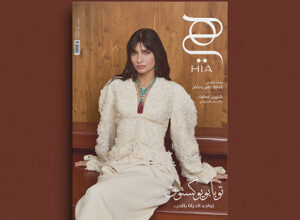
    In her column Nostalgia at Its Core, Marina Fedorova reflects on how longing shapes her art: not as a retreat into the past, but as a quiet bridge between memory and the present one that gives beauty its deepest meaning.

    Nostalgia reveals itself not as a retreat into the past, but in its truest sense as a language of refinement and well-being, a silent sanctuary woven from memory, emotion, and time. There is a beautiful expression that says the past is a paradise we can never return to.

    We can draw it and through drawing, this nostalgia returns the artist, again and again, to places they once knew, or to places they dream of reaching one day. Nature preserves its landscapes majestically, while interior spaces hold the traces of those who once lived in them, carrying within themselves the weight of the colours and the burden of memory. A painting, then, is not simply a depiction of reality, but a quiet attempt to rebuild a feeling and to preserve what time takes away in its own way.

    For me personally, this idea is geographic and deeply personal, stretching between cultures and cities from Saint Petersburg to Munich, and through travels across Europe toward imagined inner landscapes. Some places stay with us long after we leave them, and some of them grow more beautiful with time, precisely because they are no longer accessible as they once were. And here, nostalgia becomes a bridge not only between past and present, but between different versions of ourselves. Nostalgia has always been borderless in my practice, drawing me back, time and again, to the dialogue between stillness and movement. Many of my works are born from cinematic impressions: the atmospheric haze reminiscent of Twin Peaks, the sensory melancholy of Wong Kar-wai, or the romance that refuses to fade as in Casablanca. And recently, the magnificent visual world of Dune has contributed to shaping new visual narratives within my work.

    Nostalgia is not looking backwards. It is remembrance, carrying emotional depth into the present where memory participates in shaping beauty and grants time its meaning.

    And in our embrace of nostalgia as a refined aesthetic form, we must also fully inhabit the present, nourishing the balance between wonder and the extraordinary, so that memories of the future are built upon the very same beauty we live today, which we will one day preserve in memory.

    This article is the English translation. Source: Hia Magazine, April, 2026 (201) Click to open

    MARINA FEDOROVA
  • Motherhood, Creation, and the Woman’s Story in Art: Marina Fedorova for Hia

    Motherhood, Creation, and the Woman’s Story in Art: Marina Fedorova for Hia

    March has always belonged to women.
    It carries both International Women’s Day and Mother’s Day, a moment when we celebrate not one role, but many. Strength and tenderness. Ambition and care. Creation in all its forms.

    For centuries, women were told that these worlds could not coexist. That to be an artist meant to renounce motherhood, and to be a mother meant to disappear from professional life. Yet art history tells a quieter, truer story, one written not in manifestos, but in lived experience.

    Three women artists, from three European cultures, reveal how a woman can be whole.

    In Russia, Zinaida Serebriakova, artist and mother of four, painted luminous scenes of everyday life even as her world collapsed around her. Her work shows that presence, not withdrawal, is the source of beauty.
    Her famous self-portrait “At the Dressing Table” does not present an artist separated from life, but one deeply inside it, alive, present, radiant. Her portraits of children, domestic interiors, rural labor, and quiet moments carry dignity without drama.
    Serebriakova shows us something essential: art does not require withdrawal from life, it requires attention to it.

    In Germany, Paula Modersohn-Becker was asking a radical question: Can a woman belong entirely to herself, and still love, still give life, still create?
    Working between the rural artists’ colony of Worpswede and Paris, she painted mothers, children, and female bodies with unprecedented honesty. Her late self-portraits, some created while pregnant, that are not romantic or idealized. They are calm, grounded, and deeply human.

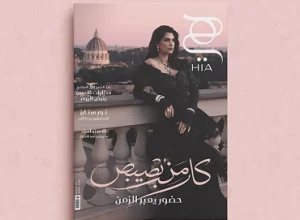
    Below is the English translation. Source: Hia Magazine, March, 2026 (249) Click to open

    MARINA FEDOROVA

  • Marina Fedorova’s column for HIA: How Love Transforms Across Time

    Marina Fedorova’s column for HIA: How Love Transforms Across Time

    Love is the oldest language of humanity.
    Before we built cities, before we named the stars, we learned how to love. Across centuries, cultures, and civilizations, love has remained our most powerful creative force, and art has always been its mirror.

    From antiquity to contemporary practice, artists have returned again and again to love not merely as romance, but as destiny, sacrifice, devotion, memory, and transcendence. Through these visual narratives, we see how love transforms across time, changing its form, yet never its essence.

    In classical and mythological art, love often appears as a divine force beyond human control. Sculptures such as The Kiss by Auguste Rodin portray love as something sacred and transformative, capable of awakening the soul, suspending time, and even conquering death.

    During the modern era, love becomes more intimate and psychological. In the shimmering gold embrace of The Kiss by Gustav Klimt, lovers dissolve into ornament and light, suggesting that love is not only emotional but spiritual, a sacred ritual binding two beings into one universe. In contrast, Rene Magritte, in The Lovers, confronts us with a painful paradox: closeness without access, intimacy clouded by mystery. Love here is not possession, but longing an unanswered question.

    In contemporary art, love often sheds idealization and appears raw, fragile, and deeply personal. The work of Frida Kahlo of reveals love intertwined with pain, devotion, and identity. Her relationship with Diego Rivera was not harmonious, yet it was profound, showing us that love does not require perfection to be real. Artists like Tracey Emin reduce love to handwritten neon confessions, honest, vulnerable, and unfiltered, reminding us that love’s greatest strength is truth.

    Across all these expressions, one truth remains: love is the greatest gift given to humanity.

    To love and to be loved is the deepest blessing and the highest form of happiness. Yet we are capable of even more, we are capable of loving without expectation, without return. Such love is divine. It is present in the unconditional love of a mother for her child, in the quiet loyalty of friendship, in compassion extended to strangers, and in care for the world we inhabit.

    Love is not weakness.
    Love is not naïve.
    Love is the pillar of our existence.

    Art reminds us of this truth again and again: styles change, epochs collapse, technologies evolve, but love remains our constant. It is our origin and our horizon. And perhaps the greatest responsibility of our time is to protect love, cultivate it, and allow it to shape the future of our world.

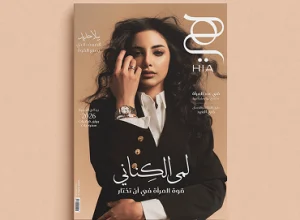
    Below is the English translation. Source: Hia Magazine, February, 2026 (272) Click to open

    MARINA FEDOROVA